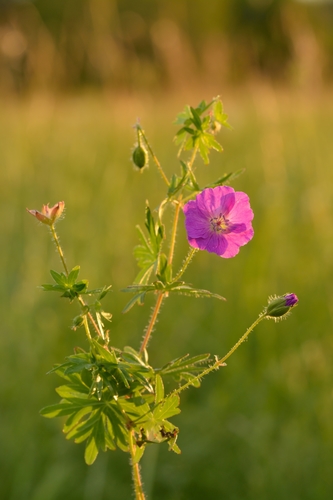
Is this in your garden?
Take a photo and Garden Rescue will tell you what you actually have, and what it needs this week.
Get the iPhone app Scan on the webBloody Cranesbill
Geranium sanguineum
Also called Cranesbill Geranium, Hardy Cranesbill
About Bloody Cranesbill
Bloody Cranesbill is a tough, long-blooming hardy perennial. It forms neat mounds of divided leaves topped with bright magenta flowers. Bees and butterflies love visiting its blooms all summer long.
- Type
- Herbaceous perennial
- Height
- 8–12 in
- Spread
- 18–24 in
- Sun
- Full sun to partial shade
- Water
- Low to medium
- Soil
- Well-drained, sandy or rocky soil
- Hardiness
- Hardy to -20 °F
- Flowers
- May to September
- Growth
- Spreading, mounding cushion
- Toxicity
- Not known to be toxic
- Native to
- Europe and western Asia
How to recognise it
- Vibrant magenta-pink flowers with five distinct petals
- Deeply divided dark green palm-shaped leaves
- Leaves turn fiery crimson in late autumn
- Low, dense mounding growth habit
Caring for Bloody Cranesbill
Watering
Every week- How often
- Water when the top 2 in of soil feels dry
- How much
- About 0.5 in per week
- When
- Morning
- Tips
- It tolerates drought well once established. Do not let roots sit in soggy soil.
Feeding
- How often
- Once in spring
- What to use
- Balanced slow-release granular feed
- When
- Early spring as new growth appears
- How
- Scatter around the base of the plant and water in
Pruning
- When
- Late autumn or early spring
- How
- Cut all stems down to about 2 in above the ground.
- Tips
- Shearing back after the first main flush of flowers encourages fresh leaves.
Jobs it will ask for
- Clear weeds around the base Pull out encroaching tall grasses and dandelion by hand. This gives the plant light and root space.
- Snip faded flowers Cut off dying flower stems. This keeps the clump looking neat into autumn.
- Cut back spent stems Cut faded autumn foliage back to the ground once it dies back after frost.
Through the year
Spring
Feed lightly with compost. New fresh leaves will rapidly emerge.
Summer
Trim straggly stems after blooming to trigger a fresh flush of foliage.
Autumn
Enjoy the crimson autumn foliage before it dies down naturally.
Winter
Leave the crown undisturbed. It sleeps safely below ground through winter cold.
What to watch for
- Powdery mildew on leaves in humid weather
- Thin out crowded stems and water only at the soil line.
- Floppy growth or sparse flowers
- Move to a sunnier spot with leaner, well-drained soil.
Reference photos
Compare what's in your garden with confirmed photos of Bloody Cranesbill.
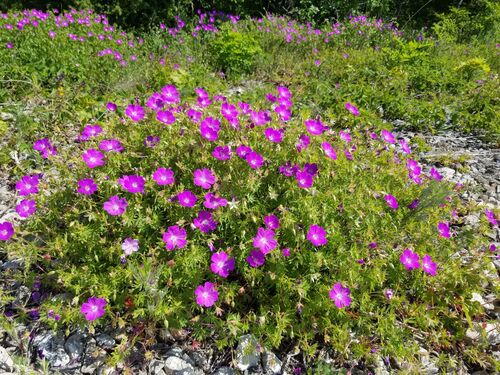
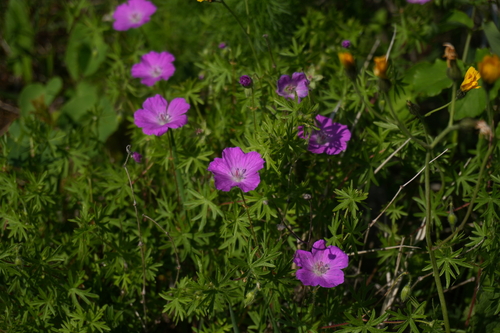
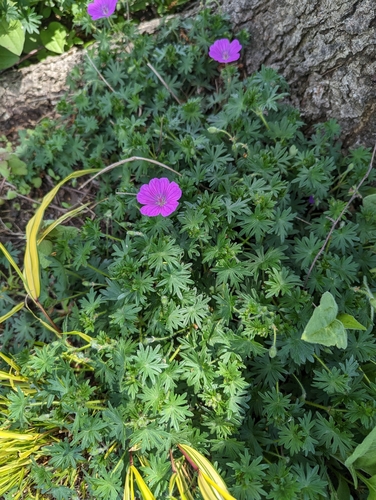
Photos from iNaturalist contributors.
Written by Garden Rescue from photo identifications, in US units. Local advice from your extension service or garden centre beats a general guide.