Is this in your garden?
Take a photo and Garden Rescue will tell you what you actually have, and what it needs this week.
Get the iPhone app Scan on the webEnglish Holly
Ilex aquifolium
Also called European Holly, Common Holly, Christmas Holly
About English Holly
English holly is a prized evergreen shrub or small tree native to Ireland, beloved for its glossy spiny foliage and vivid scarlet winter berries. It provides invaluable nesting cover and winter food for native birds while handling windy, maritime, and urban conditions with ease. Female plants require a nearby male specimen flowering at the same time to set fruit.
- Type
- Evergreen shrub or tree
- Height
- 15–30 ft
- Spread
- 10–15 ft
- Sun
- Full sun to partial shade
- Water
- Low once established
- Soil
- Moist, well-drained, slightly acidic to neutral
- Hardiness
- Hardy to 0 °F
- Flowers
- May to June
- Growth
- Upright pyramidal shrub
- Toxicity
- Berries and leaves are toxic to humans, dogs, and cats if ingested
- Native to
- Western and southern Europe, northwest Africa, southwest Asia
How to recognise it
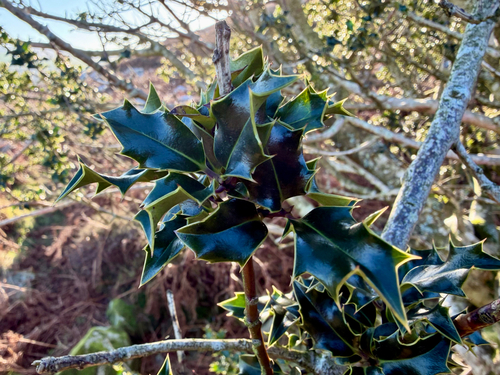
- Glossy, dark green, leathery leaves with undulating spiny margins
- Clusters of bright scarlet spherical berries borne on female plants
- Smooth gray bark maturing into shallowly fissured bark
- Dense, upright pyramidal or bushy growth habit
Caring for English Holly
Watering
- How often
- Rarely needed once established
- How much
- 1 to 2 gallons if prolonged drought occurs
- When
- Morning
- Tips
- Natural Irish rainfall is sufficient for established holly, but soak root zone during unseasonably dry spells.
Feeding
- How often
- Once annually
- What to use
- Balanced slow-release fertilizer or well-rotted compost
- When
- Early spring before new growth starts
- How
- Scatter around the drip line avoiding direct contact with the trunk
Pruning
- When
- Late winter or late summer
- How
- Lightly trim wayward branches or lightly shear to maintain shape; avoid cutting into bare old wood
- Tips
- Prune sparingly to avoid removing next year's berry-bearing wood.
Jobs it will ask for
- Apply organic mulch around the base Spread a 2 to 3 in layer of composted bark or leaf mold around the root zone, keeping it clear of the main trunk.
- Check for scale insects Inspect the undersides of leaves and young green stems for small, brown, raised scale insects before winter sets in.
Through the year
Spring
Top-dress root zone with organic compost and remove any winter-damaged or crossing branches.
Summer
Ensure adequate moisture during rare prolonged dry spells to support developing green berries.
Autumn
Enjoy the ripening red berries and apply a fresh blanket of mulch before ground frosts arrive.
Winter
Harvest berry-laden sprigs for seasonal decoration, taking care to cut cleanly with sharp bypass pruners.
What to watch for
- Holly leaf miner
- Remove and destroy affected leaves showing yellow-brown squiggly trails before adult flies emerge in spring.
- Lack of berries
- Ensure both a female and male holly bush are planted within roughly 30 to 40 ft for proper insect pollination.
Reference photos
Compare what's in your garden with confirmed photos of English Holly.
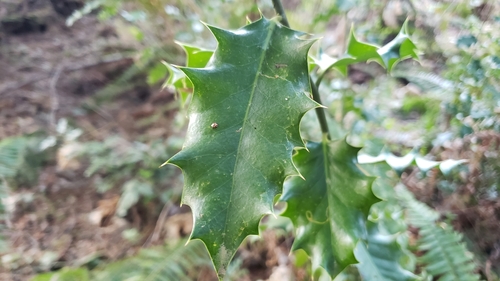
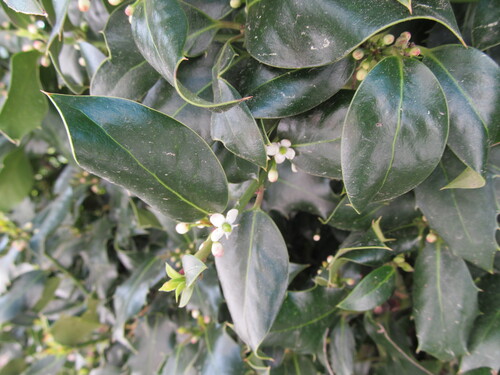
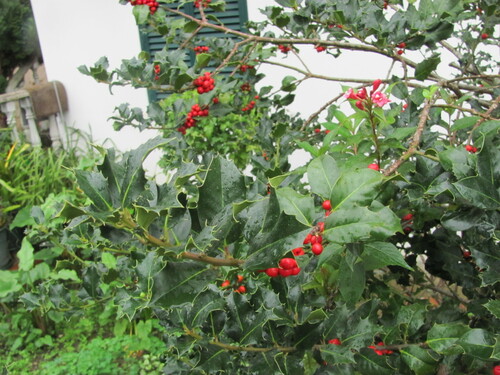
Photos from iNaturalist contributors.
Written by Garden Rescue from photo identifications, in US units. Local advice from your extension service or garden centre beats a general guide.