Is this in your garden?
Take a photo and Garden Rescue will tell you what you actually have, and what it needs this week.
Get the iPhone app Scan on the webHart's-Tongue Fern
Asplenium scolopendrium
Also called Phyllitis scolopendrium, Horse Tongue Fern, Burnt-weed
About Hart's-Tongue Fern
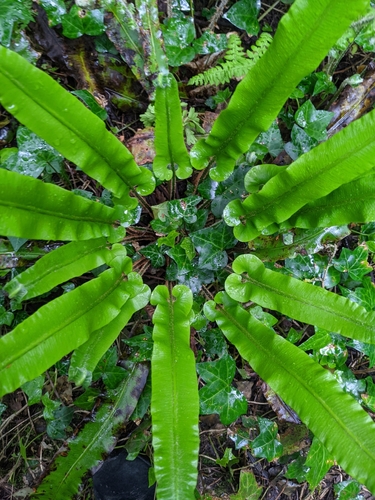
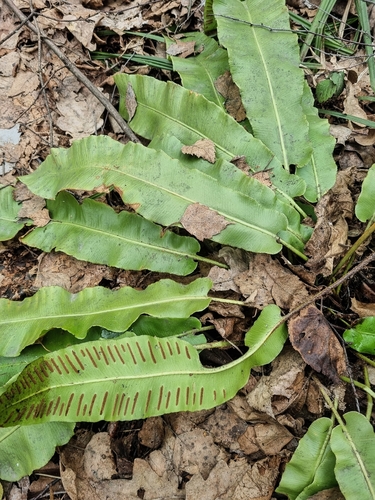
A classic evergreen native fern prized for its glossy, tongue-shaped fronds and rich green presence through winter. The prominent brown transverse stripes beneath the leaves are natural spore capsules (sori), not a disease or pest. It thrives in cool, sheltered, alkaline or neutral soils and prefers damp shade over harsh sun.
- Type
- Evergreen fern
- Height
- 12–24 in
- Spread
- 12–24 in
- Sun
- Partial shade to full shade
- Water
- Moderate; keep moist but well-drained
- Soil
- Moist, humus-rich, neutral to alkaline soil or limestone crevices
- Hardiness
- Hardy to -10 °F (USDA Zone 6)
- Growth
- Clump-forming rosette
- Toxicity
- Not known to be toxic
- Native to
- Europe (including Ireland and the UK)
How to recognise it
- Uncut, strap-shaped glossy evergreen fronds with wavy margins
- Distinctive dark brown linear sori (spore stripes) underneath
- Rosette-forming habit emerging from a short erect rhizome
- Dark brown or purple-tinged base along the central stalk
Caring for Hart's-Tongue Fern
Watering
Every week- How often
- Once a week during dry spells
- How much
- Water thoroughly until the root zone is damp
- When
- Morning
- Tips
- While rainfall usually suffices in Dublin, water during prolonged dry intervals; avoid letting the crown stay submerged.
Feeding
- How often
- Once annually in spring
- What to use
- Organic compost or leaf mould mulch
- When
- Mid-spring
- How
- Top-dress around the base without burying the central growing crown
Pruning
- When
- Late winter to early spring
- How
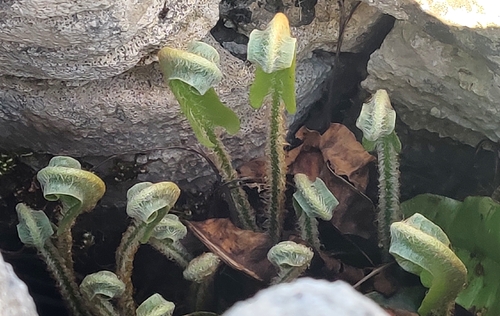
- Cut back winter-damaged, weathered, or torn older fronds right down to the base just as new croziers begin to unfurl
- Tips
- Use clean, sharp snips and take care not to snip the emerging young fiddleheads in the crown.
Jobs it will ask for
- Clear fallen debris around the crown Gently remove rotting leaves trapped in the rosette to discourage slugs and maintain good airflow.
- Mulch the root zone with leaf mould Spread an inch of rich leaf mould around the base to keep soil moisture consistent heading into winter.
Through the year
Spring
Snip away tattered fronds before new fiddleheads uncurl; apply a mulch of leaf mould.
Summer
Ensure adequate shade and moisture; fronds will bleach or scorch in intense direct midday sun.
Autumn
Allow mature fronds to protect the crown; clear excess soggy debris to keep crown rot away.
Winter
Fully hardy outdoors in Dublin; enjoy the evergreen foliage when other perennials have died down.
What to watch for
- Brown parallel stripes on the underside of fronds
- These are sori (spore clusters) and indicate a healthy, mature fern; do not remove or treat them.
- Bleached or scorched yellow fronds
- Provide shade from intense direct sunlight by repositioning container or planting beneath taller shrubs or walls.
Reference photos
Compare what's in your garden with confirmed photos of Hart's-Tongue Fern.
Photos from iNaturalist contributors.
Written by Garden Rescue from photo identifications, in US units. Local advice from your extension service or garden centre beats a general guide.