Is this in your garden?
Take a photo and Garden Rescue will tell you what you actually have, and what it needs this week.
Get the iPhone app Scan on the webSwiss Cheese Plant
Monstera deliciosa
Also called Cheese Plant, Split-Leaf Philodendron, Monstera
About Swiss Cheese Plant
Cheese plants are famous for their large, glossy leaves with natural holes. They love bright, indirect light and warm rooms. In the right spot, they grow fast and live for decades.
- Type
- Evergreen climber or houseplant
- Height
- 6–10 ft indoors
- Spread
- 3–5 ft
- Sun
- Bright, indirect light
- Water
- Moderate; let the top dry out
- Soil
- Chunky, well-draining potting mix
- Hardiness
- Hardy down to 50 °F
- Flowers
- Rarely flowers indoors
- Growth
- Climbing vine
- Toxicity
- Toxic to cats and dogs if chewed
- Native to
- Central America and southern Mexico
How to recognise it
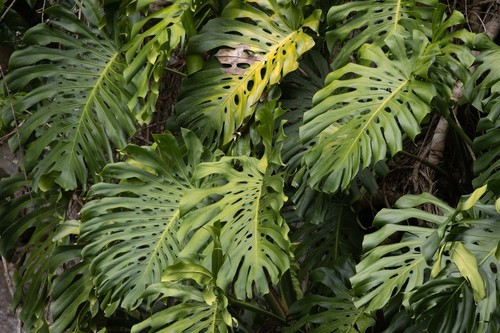
- Large heart-shaped leaves with splits and holes
- Thick brown aerial roots that climb or trail
- Glossy, dark green surface on mature foliage
Caring for Swiss Cheese Plant
Watering
Every week- How often
- Water when the top 2 in of soil feel dry
- How much
- Soak until water runs out the drainage holes
- When
- Morning is best
- Tips
- Always empty the saucer so the pot never sits in water.
Feeding
Every 30 days- How often
- Feed once a month in spring and summer
- What to use
- Balanced liquid houseplant feed diluted to half strength
- When
- After watering, never onto dry soil
- How
- Pour into the soil around the base
Pruning
- When
- Spring or early summer
- How
- Snip yellow leaves at the main stem with clean shears
- Tips
- Tuck wandering aerial roots back into the pot soil.
Jobs it will ask for
- Wipe down the leaves Gently wipe dust off the leaves with a damp cloth. This helps them soak in light.
- Check for climbing support Tie loose stems gently to a moss pole or stake with soft plant ties.
Through the year
Spring
Resume monthly feeding. Repot into a container 2 in wider if roots fill the pot.
Summer
Keep soil lightly moist. Shield the leaves from harsh midday sun to prevent scorch.
Autumn
Cut back watering as light fades and growth slows. Stop feeding until spring.
Winter
Keep away from cold window drafts and radiators. Water only when half the pot is dry.
What to watch for
- Yellowing lower leaves
- Let the soil dry out more between waterings. Yellow leaves usually mean soggy roots.
- Brown crispy leaf edges
- Increase room humidity or move the plant away from hot radiator air.
- Leaves have no holes
- Move the plant into brighter, indirect light. Young leaves need light to form splits.
Reference photos
Compare what's in your garden with confirmed photos of Swiss Cheese Plant.
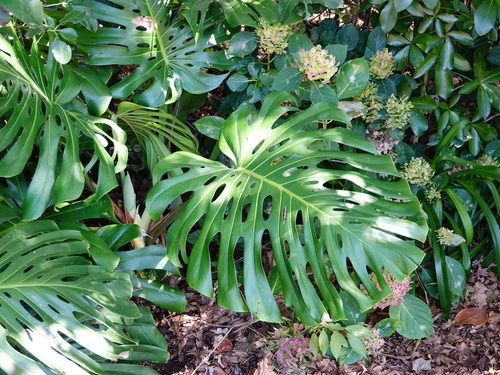
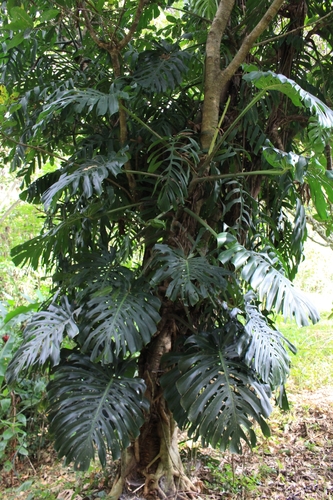
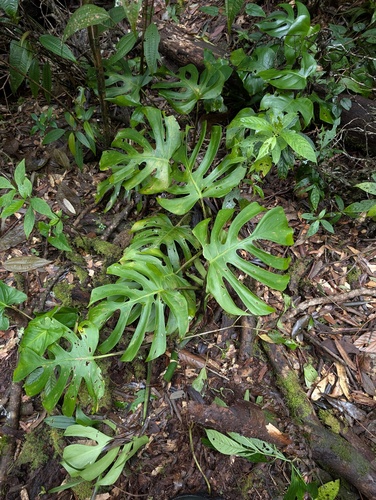
Photos from iNaturalist contributors.
Written by Garden Rescue from photo identifications, in US units. Local advice from your extension service or garden centre beats a general guide.