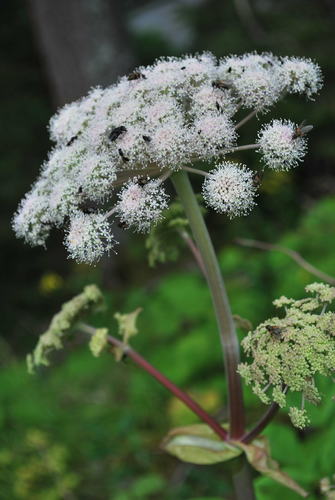
Is this in your garden?
Take a photo and Garden Rescue will tell you what you actually have, and what it needs this week.
Get the iPhone app Scan on the webWild Angelica
Angelica sylvestris
Also called Woodland Angelica, Holy Ghost Plant, Wild Parsnip
About Wild Angelica
Wild Angelica is an architectural native biennial or perennial found in damp grasslands, riverbanks, and open woods. Its late-summer domes of starry white florets are an outstanding nectar source for hoverflies, solitary bees, and beneficial predatory insects. In the mild, damp climate of Ireland, it establishes easily in borders and naturalised wildlife areas.
- Type
- Herbaceous perennial
- Height
- 3–6 ft
- Spread
- 2–3 ft
- Sun
- Full sun to partial shade
- Water
- Moderate to high; loves damp ground
- Soil
- Humus-rich, moist, neutral to slightly acid loam
- Hardiness
- Hardy to -20 °F
- Flowers
- July to September
- Growth
- Upright, architectural clump
- Toxicity
- Sap contains furanocoumarins that can cause mild skin photosensitivity; not toxic to pets
- Native to
- Europe and Western Asia
How to recognise it
- Domed compound umbel measuring 3 to 6 inches wide
- Individual florets with long, prominent radiating stamens giving a fuzzy texture
- Smooth, hollow green-to-purplish stems
- Late-season flowering from midsummer through September
Caring for Wild Angelica
Watering
- How often
- Rain-fed under normal conditions
- How much
- About 1 in per week
- When
- Morning if supplemental watering is needed
- Tips
- In Dublin's temperate, oceanic climate, natural rainfall is usually plenty; water only during prolonged unseasonably dry spells.
Feeding
- How often
- Once in early spring
- What to use
- Garden compost or well-rotted manure mulch
- When
- March or April as new rosettes emerge
- How
- Layer 2 inches around the base without touching the emerging crown
Pruning
- When
- Late autumn or late winter
- How
- Cut spent flower stems down to basal foliage after seed matures, or leave standing through winter for wildlife interest.
- Tips
- Wear protective gloves when handling broken stems to avoid skin irritation from the sap.
Jobs it will ask for
- Decide on seed head retention Leave the fading umbel intact to feed autumn finches, or snip off the stem before brown seeds scatter if you want to prevent self-seeding.
- Mulch the root zone Spread a layer of compost or shredded leaves around the base to keep root moisture consistent through autumn.
Through the year
Spring
Mulch emerging basal rosettes with compost and stake stems if located in windy, exposed borders.
Summer
Ensure soil stays moist; monitor flowering stalks for visiting pollinators and occasional blackfly colonies.
Autumn
Allow seed heads to ripen for wildlife, or collect seed to sow immediately in pots outdoors.
Winter
Leave standing architectural skeletons for frost interest, cutting back before early spring growth emerges.
What to watch for
- Black aphids clustered along top stems
- Hose them off with a strong blast of water or let natural hoverfly and ladybird larvae consume them.
- Powdery mildew on lower leaves
- Ensure good air circulation around the crown and make sure the soil remains consistently moist.
Reference photos
Compare what's in your garden with confirmed photos of Wild Angelica.
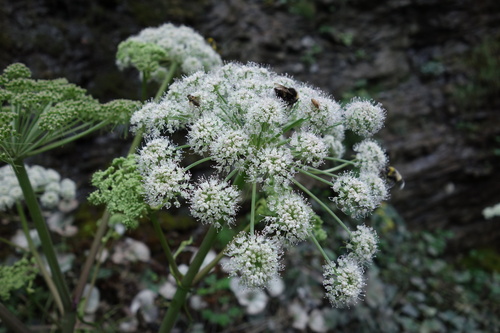
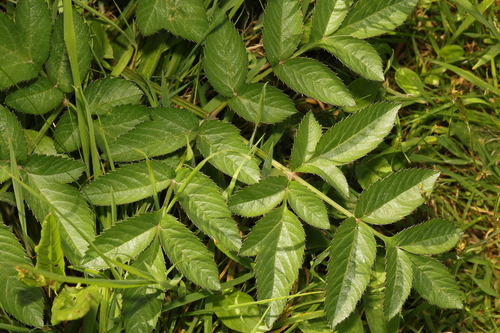
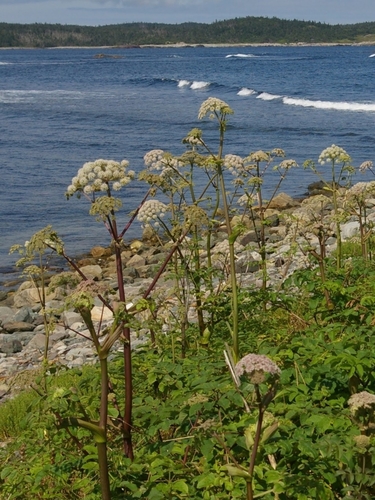
Photos from iNaturalist contributors.
Written by Garden Rescue from photo identifications, in US units. Local advice from your extension service or garden centre beats a general guide.