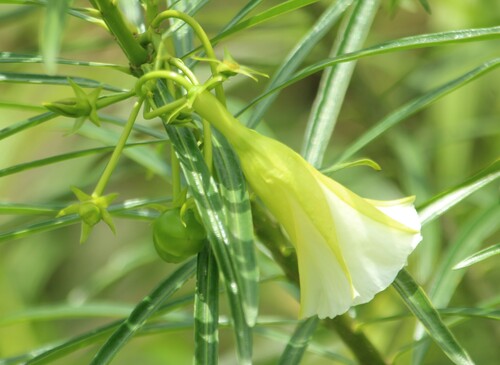
Is this in your garden?
Take a photo and Garden Rescue will tell you what you actually have, and what it needs this week.
Get the iPhone app Scan on the webYellow Oleander
Cascabela thevetia
Also called Lucky Nut, Be-still Tree, Mexican Oleander
About Yellow Oleander
Yellow Oleander is a fast-growing, heat-loving evergreen shrub known for fragrant, spiraled yellow blossoms and glossy narrow foliage. It thrives in hot, sunny spots and tolerates poor, dry soils with ease. Note that all parts of the plant are extremely poisonous if ingested.
- Type
- Evergreen shrub or small tree
- Height
- 8–15 ft
- Spread
- 6–10 ft
- Sun
- Full sun
- Water
- Low once established
- Soil
- Well-drained, sandy or loamy soil
- Hardiness
- Hardy to 25 °F
- Flowers
- May to October
- Growth
- Upright, rounded dense shrub
- Toxicity
- Extremely toxic to humans, cats, and dogs; contains dangerous cardiac glycosides
- Native to
- Mexico and Central America
How to recognise it
- Glossy, narrow willow-like linear leaves
- Funnel-shaped yellow flower with twisted, spiral petals
- Milky sap produced when stems or leaves are broken
- Bushy, multi-stemmed upright shrub habit
Caring for Yellow Oleander
Watering
Every 2 weeks- How often
- Occasional deep soaking during prolonged heat
- How much
- About 1 in every two weeks if no rain falls
- When
- Morning
- Tips
- Very drought tolerant once established; avoid overwatering or waterlogged soil.
Feeding
- How often
- Once in early spring
- What to use
- Balanced slow-release fertilizer
- When
- Early spring at start of active growth
- How
- Scatter around the drip line and water into the soil
Pruning
- When
- Late winter or early spring before fresh growth begins
- How
- Thin out crossing branches and cut back shoots by up to one-third to maintain shape and density.
- Tips
- Always wear thick gloves and eye protection; the milky sap is an irritant and toxic.
Jobs it will ask for
- Check stems for oleander caterpillars or scale Inspect the undersides of the dense foliage for small defoliating caterpillars or scale insects.
- Clean up fallen seed pods and leaves Rake up any fallen nuts or foliage and dispose of them safely away from pets and children.
Through the year
Spring
Prune lightly to shape and apply a light dressing of balanced organic fertilizer.
Summer
Enjoy heavy flowering; provide supplemental water only during severe dry spells.
Autumn
Reduce watering and gather dropped seed pods to prevent accidental ingestion or unwanted self-seeding.
Winter
Protect roots with mulch in marginal climates where frost may occasionally occur.
What to watch for
- Oleander caterpillar infestation
- Hand-pick while wearing protective gloves, or spray with Bacillus thuringiensis (Bt) if feeding is severe.
- Root rot from wet soil
- Ensure planting location has sharp drainage and withhold irrigation during rainy or cool periods.
Reference photos
Compare what's in your garden with confirmed photos of Yellow Oleander.
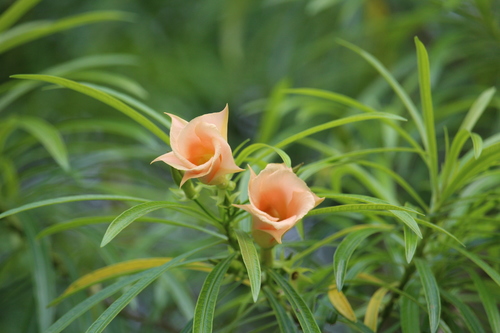
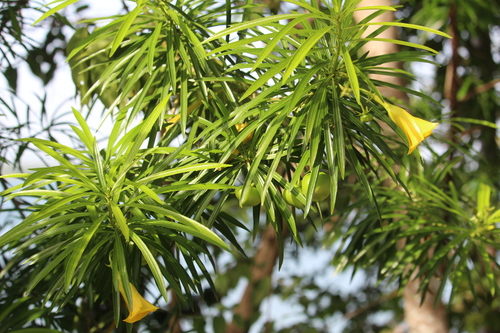
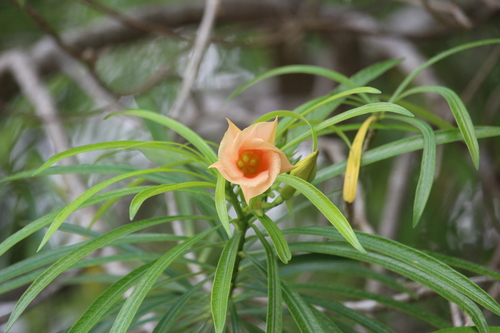
Photos from iNaturalist contributors.
Written by Garden Rescue from photo identifications, in US units. Local advice from your extension service or garden centre beats a general guide.